The Problem with Fun

You do not play ttRPGs for fun. You play ttRPGs because they have strange worlds, compelling characters, terrible monsters, and challenging problems. You may or may not find any one of these things fun, but you play your game because it possesses things like these, and not (only) because “it is fun.” If you were just looking for fun, you could find it in much easier places.
Of course, that doesn’t, and shouldn’t, convince you of any “problem” with fun.
I am not here to speak on the tyranny of fun,1 or of hating fun…2 I’m not here to tell you that you must suffer for your games, or that you should avoid playing lighthearted games for your entertainment.
But you can’t design fun, and you can’t even know whether a game is fun before
you play it. Fun is just a reaction players have to a game's material—its content
and its rules.3 Play creates activities, dynamics, and themes from that material, which the players react to, but that reaction is their own, and neither a game or a game-master can choose it for them beforehand. A mystery, a very good mystery, can elicit excitement in one player and total frustration in another. All a mystery
can do is be mysterious; it cannot control a player’s curiosity, even if it makes itself very enticing.
If you chase after fun, you will fail to find it, and in the attempt, you will miss what makes your game good. Our culture, industry, and language are suffused with the notion that fun is good game design, and you should play games for fun.
In this essay, I’ll attempt to prove why that’s wrong.
“It’s all fun and games.”
The language of fun is ubiquitous everywhere we play games. Fun is presented to us from when we are young as the overriding virtue of games, and our reason for engaging with them. If we express hesitance to try a game, we’re told, “C’mon, it’ll be fun.” When we got a little too frustrated at the Monopoly table, it’s our parents or siblings who told us first: “It’s only a game. We’re here to have fun!” RPGs are not exempt from this influence.
As I write this essay, the next million-dollar RPG Kickstarter is finishing up.
It advertises itself starting with this sting: “D&D has been described as ‘30 minutes of fun, spread out over 4 hours.’ It doesn't have to be that way!” Its creator uses “fun things” as a synonym for games, describing himself as “designing for decades, making fun things.” One popular ttRPG Youtuber describes his channel as “where we learn how to have more fun playing RPGs together.” Look for examples of this language, and you will see them literally everywhere games get talked about.
I find new ones, without exaggeration, every single day.
Likewise, you may have heard these ideas put into practice. “Your game is good
so long as everyone at the table is having fun.” Have you ever played a game with
a “rule zero” (one that says “what’s fun, goes”), or a “rule of cool?” Have you ever heard the advice, as game maker or master, to “find your fun?” When you find your fun, so the logic goes, people like you will find your game fun too, and come to play. (And—after all—if you’re not having fun, what’s the point?)
Pared down, it’s absolutely intuitive: we like fun games better than not-fun ones. So, where can we find some fun?
Chase after fun, and you will fail to find it.
Even if you agree in principle that a fun game is better than a not-fun one, you don't learn how to distinguish what that looks like without asking players at the table. More to the point, you might mistake players who don’t look like they’re having fun as suffering from a bad game.
Games contain multitudes. I would not deny the Mothership player their “I-don’t-want-to-know-what’s-making-noise-in-that-vent,” just as I would not deny the Blood on the Clocktower player their “I-think-my-friends-are-pathological-liars,”
just as I would not deny the Darkest Dungeon player their “I-should-have-brought-more-fucking-bandages.”4 Do fear, paranoia, and attrition sound fun to you? Maybe you reply, “of course.” Maybe you’ve played these games, or games like them, and you’ve enjoyed yourself. But then how do we distinguish between the fun kinds of stress, and all the other kinds? Have you ever experienced stress from a game and thought it wasn’t the good kind? What principled difference do we strike between the kind of spreadsheets you might fill out at an office job, and those EVE Online players make?
If we look at players at the table and observe that they’re happy, or stressed, or sad, we don’t actually learn why—what they’re reacting to. This sort of empirical approach doesn’t engage with the material of the game itself. If a game designer A/B tests two versions of a new mechanic, and picks A because “surveys suggested that it was more fun,” the designer hasn’t actually learned anything about the game they’re designing, they've learned something about their players.
Furthermore, even when two things seem fun, we can’t simply add them together and ensure a fun game results. There are more people who like pineapple and pizza than people who like pineapple on pizza, because a food's delectability is not the sum of its parts. The successful combination of two game’s activities (or genres, or rules) is challenging, but finding a solution is never an exercise in “maximizing fun”—it's one of finding ways where the two harmonize or contrast instead of mitigating one another. You must pay attention to the material of the thing itself: you don’t want the pizza to be soggy or the pineapple to be burnt.
“Obviously, we use fun to mean different things.”
In this essay, I haven’t bothered to define fun. This is because such an attempt would not only be futile, it would contribute nothing to the argument; we use the term in a torrential number of different ways. So far, I’ve come short of characterizing fun as anything other than “a desirable subjective experience,” because that’s the only thing in common between the deluge of interpretations colloquial and rarefied I’ve read while writing this essay. It also happens to be the only thing I need to make my argument. On that basis alone, you can be sure that you can’t design fun.5
So much ink has been spilled distinguishing long-term fun from short-term,6 type 1 fun from type 2,7 writing player taxonomies to diagnose the different skull dimples players must possess to enjoy this genre and not that one…8

…myself, I can’t help but wonder if we’re mistaking the cart for the horse.
Baked into all these sacred geometries is the assumption that fun is ultimately what we’re after when we make and play games, but any approach to art which suggests we should all be trying to accomplish the same thing9 is myopic. Even if you conflate fun with “all the positive reasons we might play games,” and eschew any more specific a definition, you do an injustice to the depth and diversity of motives we take on when we sit down at a table. This is like conflating “beauty” with every reason we might have to look at a painting. Will most game-makers want their games to be fun? Very possibly. Most painters wish to paint beautiful paintings!
But not all of them—not all the time. And while, with an open mind, you can describe every great tragic and terrifying and grotesque painting as “beautiful”
in some abstract sense, just as you can describe every valuable experience in our games as “fun,” such a definition serves only to flatten our diverse landscape
and constrain its horizons. It is not useful to us.10


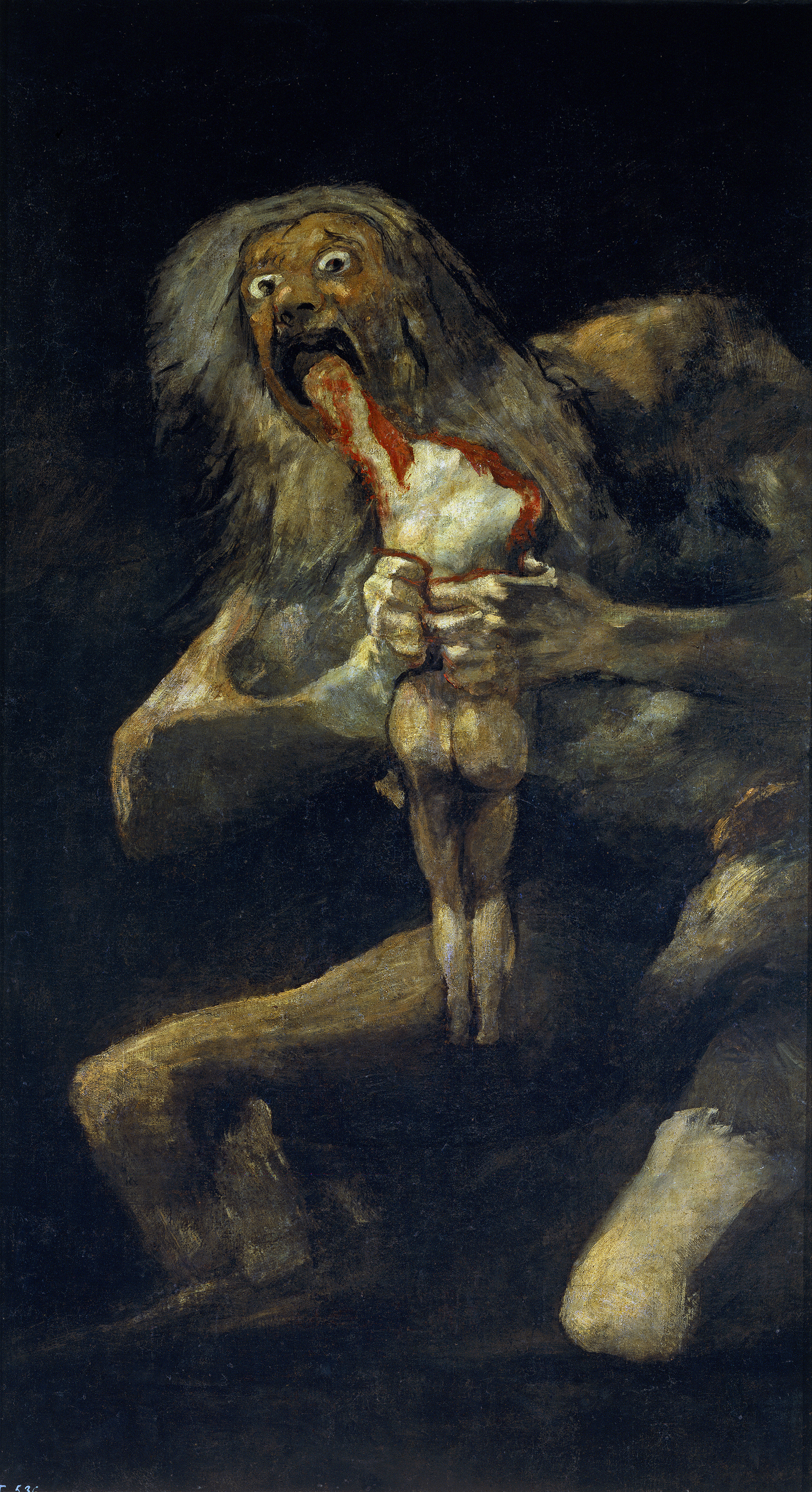
Chase after fun, and you will miss what makes your game good.
Pause for a moment, please, to consider the most impactful experience you’ve had playing an RPG.
Now, recall how you felt. Was it fun? I’m sure, for many readers, it was. I’m doubly sure that for nearly all of you it wasn’t so impactful because it was fun, but the fun came in a package deal with the impact. And for some of you, maybe it wasn’t fun. Not at all.
The most impactful experience I’ve had playing an RPG was probably the time my character failed11 to get revenge on his nemesis miserably and entirely of his own fault, literally having to watch him sail into the sunset. My cousin cited two experiences: once when he grabbed me by the collar and lifted me up during a tense negotiation, and a time when his character had died, and my cousin's friend wept bringing the news to that character's father.
Games are the safest places we have to be frustrated, uncomfortable, and heartbroken. Should we forfeit these experiences? When we make games,
we face decisions which weigh all sorts of fun against other concerns.
Shortly after Darkest Dungeon’s release, the developers added corpses, making dead enemies maintain their position on the battlefield. Suddenly, taking out the enemy frontline didn’t guarantee access to their backline. This change forced players to directly address a factor which they could easily mitigate before—and they hated it. Reviews tanked. It made the game more difficult without a corresponding increase to any kind of satisfaction (rather, the dominant strategy before the change was to “buzz-saw” through enemies, front to back—immensely satisfying and fun).
But Red Hook “decided [corpses were] right for the game. It was the right mechanical decision, the right thematic decision… [they] stood by it.”
Corpses remained, and the game’s critical reputation recovered after players realized what the designers already knew.
Outer Wilds’ creative director said that, in trying to design a space exploration game such that curiosity was the primary motivator of the player’s decisions, it was necessary to strip away everything else that could be motivating them: no levels or progression, no points, no collectibles, and no developing NPC relationships.
Does that sound like a designer chiefly concerned with his players’ fun?
I had tremendous fun playing Outer Wilds. But when my investigation ceased
to be fun and became frustrating, or listless, my curiosity is what compelled me
to continue to play.
“Wait,” I hear you say, “but curiosity is a subjective experience too!12
Doesn’t this example weaken the case?” This example is illustrative precisely because it demonstrates how a designer can embrace a subjective experience without trying to engineer it: Outer Wilds’ developers didn’t add anything to the game to reward curiosity. At most, they did things like increasing the size of landmarks to make them visible from space. But they relied on those landmarks,
the content of the game, to speak for it, and engender curiosity if they would.
Rather than attempting to reward curiosity with things like collectibles,
they just gave it some space, and let players bring it to the material themselves.
Ask yourself: do you play games for fun? Do you have any other goals—
whether to learn something new, or to be challenged, or to express yourself,
or to escape yourself—that you would value as much, or more, than having fun?
Towards a pluralism
Fun is not your enemy, but neither is it your ally. Fun is one product of how we engage with a game’s material; it is not what makes the material good or bad.
Try to find fun inside a game, and you will only find bones. Try to put fun inside your game, and murder it in the surgery.
So, put the horse before the cart. We have control over the material we build our games with, but we must accept that a diverse set of experiences emerges from it. When you have a special experience with a game, work backwards from how it made you feel to the stuff of the game itself, and ask why. If you’re designing a game with a particular experience in mind, like horror, curiosity, or fun, first consider
the material circumstances in which you’ve felt that way before, and explore those circumstances through your design. You might be surprised at how many other valuable experiences emerge, even those at odds with your original idea. If you already have some material in mind—an activity (like a heist), a location (like a flying castle), or a set of characters (like giant royalty)—explore what sorts of experiences you can get out of that material.
If you want practice diagnosing and troubleshooting the problem with fun, try to advocate for games’ not-fun experiences. Recognize that enjoyable experiences can undermine or weaken a game’s themes, just the same as unenjoyable ones. Consider removing “rule zero” (the one that says “what’s fun, goes”) from your tabletop roleplaying games. Don’t say you’ve changed a rule “because it was more fun this way,” because you will always have reasons more concrete than that. Where you hear someone else say “because it was more fun this way,” in the same spirit, ask why.
…and, where you see “fun” used as shorthand for “good game design,” remind them of the problem with fun.
Afterword
Thanks for reading my first post. Apologies if you feel like, well…
 I have lots of iconoclast opinions about RPGs, but it’s best to understand me in the spirit of dialectic; I am a young, green sprout in a rich, decaying environment.
If you’d like to give me some sun, please share this post around.
“The Tyranny of Fun” was a term coined in criticism of D&D 4th edition, meaning briefly that “fun is a loaded term, and it should not be assumed to mean the same thing to all people.” This essay assumes this as ground truth, and goes on to criticize fun being a goal of games in the first place.↩
I Hate Fun proclaimed its author’s disdain for fun as “experiential junk food.” He would later characterize the essay as “a wonderful manifesto [for pursuing] meaning in whatever way speaks to someone,” which is closer to the shape of the argument I make in the second half of this essay, but I can’t—and won’t—characterize fun as something to fight against, for the same reason that I won’t characterize it as something to fight for. The prescription I make in this essay is essentially technical: I’m trying to describe a misunderstanding of what we make games for and about, not to champion an alternative for what we should make games for and about.↩
I don’t distinguish in this essay between where game material derives: system, module, GM, player. For the purposes of my argument here, all of that stuff makes up a single game, because players engage with all of it, as one, during play.↩
I use examples of all kinds of games interchangeably throughout this essay, not just roleplaying games. This is because I don't believe in RPG exceptionalism, and firmly believe that RPG designers have a lot to learn from other types of games (and vice versa).↩
Finding the fun: reward cycles is a thorough and precise article that recovers some Forge theory and provides rich ground to discuss how games intersect with and engender “affective responses”—but any fun it finds is couched in those affective responses, which are subject to a group. In fact, it gives an example where the author is at odds with their group’s response, and another where two groups reward different behaviors in the same situation. The article goes on to admit that “we cannot say in advance, as armchair game designers and critics, what will or will not count as a reward cycle. At best we can make rules of thumb from experience.” Furthermore, the author asserts that they “have a hard time enjoying a challenge if [they] don't fall into one of these reward cycles a good chunk of the time.” If a reward cycle is only codified by the presence of an affective response, like enjoyment, the implication is circular: “I’ll have a hard time responding affectively to a challenge if I don’t respond affectively to the challenge a good chunk of the time.”↩
Short-term fun ruins long-term enjoyment compares fun had in the moment to sweetness in a beverage, and argues that “you can increase temporary fun but decrease overall enjoyment, and it’s really easy to do […] shovelling sugar into your drink and trying to convince yourself it tastes better.” It’s a good read, and contains several examples of design decisions which weigh all kinds of fun against other concerns. Nonetheless, it doesn’t escape from the problem with fun because it pits two kinds of fun against one another, both remaining subjective.↩
Against intent argues that players seeking to have fun is bad for games. It goes on to borrow the concept of types 1 and 2 fun (which originate from mountain-climbing), where 1 is in the moment and 2 is after the fact, and asserts that type 2 is often miserable in the moment. Similar to long-term fun versus short-term fun discussed above, transferring our games’ goal to “having fun after the fact” doesn’t escape the problem with fun.↩
The construction of player taxonomies is an ancient and august tradition in gaming-places, and from Blacow to Bartle to Laws they’re as persuasive and spurious as personality tests. Players can play different games, at different times, for different reasons.↩
Of course, art (including games) has the capacity to engender complex experiences, like beauty in the face of horror, or bitter-sweetness, or the sublime, and these experiences are often especially impactful. Nonetheless, burdening all art to be partially beautiful wouldn’t solve the underlying problem with a monistic understanding of art’s value.↩
And I failed. No GM fiat brought me there.↩
Fun is only the worst offender, because it’s so often unquestioningly framed as a metric of any game’s success. Enjoyment, satisfaction, excitement, engagement, buy-in, and fun’s many synonyms suffer the same problem, as well as curiosity, horror, relaxation, and even frustration. So long as a reaction to a game is treated as that game’s ultimate goal, the problem with fun rears its ugly head.↩